How to Start a Cottage Food Business in Rhode Island: $65 RIDOH Registration, $50,000 Sales Cap, Pickup and Delivery Only
Rhode Island's cottage food law lets you sell certain home-baked goods directly to customers without building a commercial kitchen or holding a full food establishment license. The trade-off is strict limits: the state caps your gross sales, restricts how you can sell, and requires registration with the Department of Health (RIDOH) before your first sale.
This guide covers what the rhode island cottage food law requires, what you need before you register, and the steps in order. It is informational content, not legal or tax advice. Rules and fees can change, so confirm current requirements with RIDOH before you buy equipment or packaging. If your plans go beyond a small home bakery, talk with a qualified attorney or CPA.
What the Rhode Island Cottage Food Law Allows
The state's cottage food provision is RIGL 21-27-6.2. Under that section, a registered cottage food maker can:
- Produce qualifying baked goods in a home kitchen after registering with RIDOH for $65 per year.
- Earn up to $50,000 in gross sales per calendar year. Once sales go past that cap, you need a food processor license.
- Sell directly to consumers by pickup or delivery. Internet, mail and phone orders are allowed, but the registrant or a designee must deliver the product in person within Rhode Island.
The law is narrower than many new bakers expect. It does not allow sales to wholesalers, consignment shops, grocery stores, restaurants, schools or care facilities. If your plan depends on a coffee shop carrying your muffins, the cottage food license does not cover that arrangement.
Qualifying Products
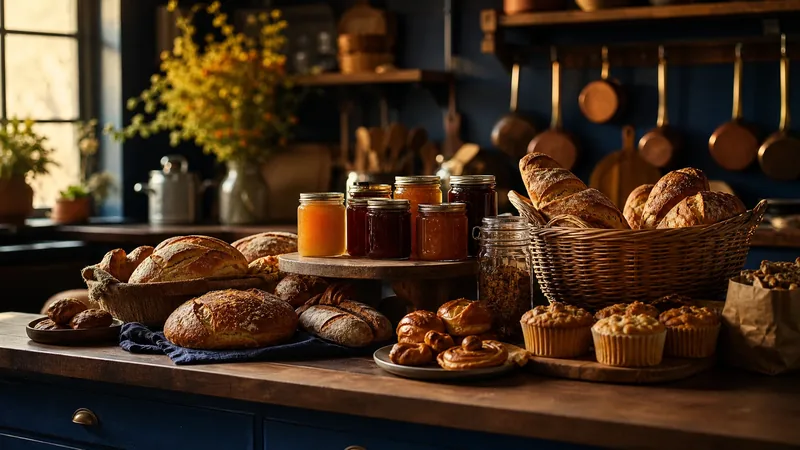
Approved products are baked goods that do not need refrigeration, such as double-crust pies, yeast breads, biscuits, brownies, cookies, muffins and cakes. A product that needs refrigeration, such as one with a custard or cream cheese filling, is not on the list. Confirm any item outside that list with RIDOH before you sell it.
If you also grow or raise ingredients on a farm, a separate farm home food registration under 21-27-6.1 costs $65. It is a different registration from the cottage food registration.
Materials and Requirements to Gather First
Collect these items before you start the registration process. Missing one usually means a delay.
- A home kitchen that meets the RIDOH kitchen standards, plus a written recipe card for each product that lists every ingredient and allergen.
- A food safety manager certification or an approved food handler course certificate. Complete the course before you register.
- A notarized affidavit of compliance. You sign it in front of a notary public, so book one in advance and ask about their fee.
- A yearly water test result if your home is served by a private well. Homes on public water do not need this test.
- The $65 registration fee, paid each year you sell.
- Labels for every product with the ingredients, allergen statement and the statutory not-inspected statement.
- A kitchen scale and a sales log that records date, product, amount and payment method. You need this to track the $50,000 cap.
- A business name decision, if you plan to sell under something other than your own name.
Step-by-Step: Registering a Cottage Food Business in Rhode Island
Step 1: Confirm Your Products and Sales Channels
Write down every product you plan to sell and how each one will reach customers. Check each item against the approved list. Then check each channel. Direct pickup, in-person delivery, and internet, mail or phone orders fit the law. Wholesale, consignment and retail store placement do not. Make this decision before you buy packaging, because the wrong product mix means redoing labels and recipes later.
Step 2: Choose Your Business Structure
Most home bakers start as sole proprietors, and you do not need to form an LLC to make cottage food sales. If you sell under a name other than your own, a sole proprietor registers a trade name with the Rhode Island Department of State for $20. An LLC or corporation that uses a business name files a fictitious business name statement for $50 instead.
Forming an LLC adds costs. The filing fee is $150, the annual report costs $50 and is due between February 1 and May 1 each year, and every LLC owes the $400 minimum (an annual fee, or the minimum tax if the LLC is taxed as a corporation), whether or not it made money. Before you choose a structure, talk with a CPA about how the $400 minimum tax and your personal income taxes fit your situation.
Step 3: Complete Food Safety Training
Complete either a food safety manager course or an approved food handler course, and keep the certificate in your records. Print a copy for your registration packet. Courses come from several providers, and prices vary, so compare options before you pay. Confirm with RIDOH which course types it accepts.
Step 4: Prepare Your Kitchen and Water Supply
Review the RIDOH kitchen standards and make any changes before you apply. Walk through your kitchen as an inspector would: check work surfaces, storage and the areas where you bake and package. If your home uses a private well, schedule the water test now, since it must be done yearly and the result must be on file. Homes on public water can skip this step.
Step 5: Sign the Notarized Affidavit of Compliance
The affidavit confirms that you will follow the cottage food rules. Read it closely before you sign, and make sure your kitchen, products and sales plan match what you state. Sign it in front of a notary public. Notary fees vary, so ask before you book.
Step 6: Register With RIDOH
Submit your registration to the Rhode Island Department of Health with the $65 fee, the signed affidavit, your training certificate and, if applicable, your water test. Start at health.ri.gov and search for the cottage food registration to confirm the current form and submission method. This guide does not state a RIDOH processing time, so ask when you submit and do not schedule your first order or market booth until you have written confirmation.
Step 7: Get Your Labels Right
Every product label must list the ingredients, identify the allergens and include the statutory not-inspected statement. This guide does not reproduce that statement, so copy the exact wording from RIDOH's current cottage food guidance. Do not add health claims to your labels or marketing, such as claims that a product lowers cholesterol or treats a condition. FDA regulates nutrition and health claims, and an unsupported claim can create problems even for a small seller.
Step 8: Obtain a Retail Sales Permit and Understand Sales Tax
Anyone making retail sales in Rhode Island must hold a retail sales permit from the Division of Taxation. Apply on the Business Application for Registration at https://www.ri.gov/taxation/BAR/. Renew the permit annually by February 1. The $10 application and renewal fees were eliminated for periods beginning on or after July 1, 2022.
Rhode Island's sales tax rate is 7%. Prepared food carries an additional 1% local meals and beverage tax, for 8% total. Whether your baked goods fall under the meals and beverage rate depends on how you sell them, so confirm the treatment with the Division of Taxation at https://tax.ri.gov before you set your prices.
Step 9: Check Local Rules and Farmers Market Requirements
Rhode Island has no general statewide business license. However, your city or town may regulate home businesses through zoning, and some towns license specific activities. Rhode Island has 39 cities and towns, and each sets its own zoning and permit rules. Call your city or town clerk or zoning office and ask whether a home food business needs anything beyond the state registration.
If you plan to sell from a booth at a farmers market, check with RIDOH whether a retail food peddler registration applies. That registration is listed at $100, but confirm whether it applies to your situation before you pay for a booth.
Step 10: Track Sales Against the $50,000 Cap
The cap applies to gross sales in each calendar year. Start tracking from your first sale, and review the total every month. If your totals approach $50,000, plan your move to a food processor license before you go over, because the cap is a hard limit under the law.
Costs at a Glance
| Item | Amount | Where to Pay or Confirm |
|---|---|---|
| RIDOH cottage food registration | $65 per year | Rhode Island Department of Health |
| Farm home food registration (separate) | $65 | Rhode Island Department of Health |
| Trade name registration (sole proprietor) | $20 | Rhode Island Department of State |
| Fictitious business name statement (LLC or corporation) | $50 | Rhode Island Department of State |
| LLC filing fee | $150 | Rhode Island Department of State |
| LLC annual report | $50, due February 1 to May 1 | Rhode Island Department of State |
| LLC minimum tax | $400 per year | Rhode Island Division of Taxation |
| Retail sales permit | No application or renewal fee for periods beginning on or after July 1, 2022 | Rhode Island Division of Taxation |
| Retail food peddler registration (farmers market booth, check whether it applies) | $100 | Rhode Island Department of Health |
| Food safety course, notary, label printing | Varies, not set by the state | Course provider, notary, printer |
Common Mistakes to Avoid
- Selling to a café, grocery or restaurant. That is wholesale, and the cottage food law prohibits it.
- Assuming a home kitchen does not qualify. Home kitchens qualify under the cottage food law. The mistake is treating the kitchen as the only requirement, when training, the affidavit, labels and the sales tax permit all still apply.
- Making refrigerated items. Cream-filled and custard products are outside the approved list, so confirm before you add them to your menu.
- Shipping instead of delivering in person. Mail and internet orders are allowed, but the registrant or a designee must deliver the product in person within Rhode Island.
- Selling before your registration is in place. Hold your first sale until RIDOH registration is complete and you have confirmation in writing.
- Copying another brand's label. Write your own ingredient and allergen list from your actual recipes, and recheck it whenever a recipe changes.
- Ignoring the cap. Gross sales includes all your cottage food sales for the calendar year, so a sales log is not optional.
- Forgetting the sales tax permit. Anyone making retail sales needs one, and the permit must be renewed by February 1 each year.
- Skipping the water test. If your home uses a private well, the yearly test is part of staying compliant.
Expected Results
A cottage food registration can help you test products, build a local customer base and learn what your market will buy. It does not guarantee sales or income. Results depend on your product mix, pricing, location, time spent selling and how well you keep your records. Many home bakers start with a few products and a small group of regular customers, then expand as their process and their list of buyers grow.
When you describe your results or products, stay within what you can support. Avoid statements that a product cures, prevents or treats any disease or condition, because those are claims FDA treats as drug claims. Describe your baked goods by taste, ingredients and freshness instead.
Renewal and Ongoing Compliance
- Renew your RIDOH cottage food registration each year for $65.
- Renew your retail sales permit with the Division of Taxation by February 1.
- Keep your yearly water test on file if you use a private well.
- Update your labels whenever a recipe, ingredient or allergen changes.
- Review your sales log monthly against the $50,000 cap.
- If you form an LLC, file the $50 annual report between February 1 and May 1 and plan for the $400 minimum tax.
Official Resources
- Rhode Island Department of Health: health.ri.gov (search for cottage food registration)
- Rhode Island Department of State business name search: https://business.sos.ri.gov/CorpWeb/CorpSearch/CorpSearch.aspx
- Trade name registration: https://www.sos.ri.gov/divisions/business-services/ri-trade-names/register-trade-name
- Rhode Island Division of Taxation: https://tax.ri.gov
- Retail sales permit application: https://www.ri.gov/taxation/BAR/
- Rhode Island Small Business Development Center: https://web.uri.edu/risbdc/
- U.S. Small Business Administration, Rhode Island district: https://www.sba.gov/district/rhode-island
This article is informational only and is not legal or tax advice. Cottage food rules, fees and deadlines can change. Confirm current requirements with RIDOH, the Division of Taxation and your city or town, and consult a qualified attorney or CPA about your specific situation.
Keep exploring: related Rhode Island guides
- How to Start a Coffee Shop Business in Rhode Island
- How to Start a Food Truck Business in Rhode Island
- How to Start a Catering Business in Rhode Island
- How to Start a Brewery, Distillery or Winery in Rhode Island
- How to Start an LLC in Rhode Island
- Rhode Island Business License
- How Much Does It Cost to Start a Business in Rhode Island
- All Rhode Island business types
- Every Rhode Island guide in one place