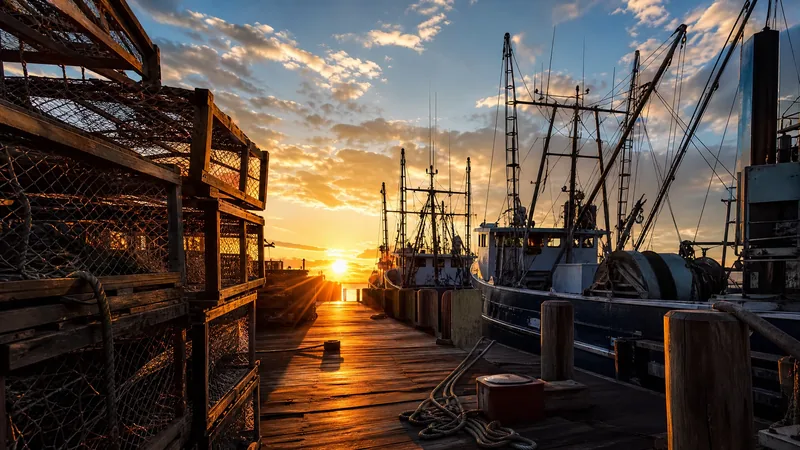
How to Start a Commercial Fishing Business in Rhode Island: DEM Standard License $150 to $450, Endorsements, $25 Vessel Declaration and Limited-Entry Rules
If you plan to fish for a living in Rhode Island waters, you need a commercial fishing license from the Department of Environmental Management (DEM) Marine Fisheries program before you sell a single pound of catch. This guide walks through how to start a commercial fishing business in Rhode Island, from choosing your license and endorsements to declaring your vessel, setting up the business paperwork, and understanding the limited-entry rules that catch many newcomers off guard.
Disclaimer: This article is informational content, not legal or tax advice. Fees and rules change, so confirm every figure with the agency named before you pay or file. For complex situations, such as partnerships, vessel ownership questions, or tax planning, consult a qualified attorney or CPA.
What You Need Before You Start
Gather these items before you apply for anything. Most delays come from missing information, not from the licensing process itself.
- Proof of Rhode Island residency. Resident and non-resident fees differ sharply, and the difference is more than double for most license types. Confirm which documents DEM accepts.
- A vessel you own or control, along with its registration details. Vessels are declared through DEM's Office of Boat Registration and Licensing.
- A target species list. You need this to choose fishery endorsements (finfish, shellfish, or crustacean) and to understand which ones are open to new entrants.
- Applicant identification and contact details in the form DEM requires. Confirm the current list with DEM before you apply.
- Business documents if you plan to form an LLC or corporation, including a name that is available in the Department of State's Corporate Database and a Resident Agent with a Rhode Island physical address.
- A payment plan for the fees. Budget for the license, the annual vessel declaration, and any entity or permit fees covered in the steps below.
- A calendar with the DEM vessel declaration deadline, the February 1 to May 1 annual report window, and the February 1 retail sales permit renewal date.
Step 1: Choose Your Standard License and Endorsements
DEM licenses commercial fishing under Rhode Island General Laws chapter 20-2.1 and the regulations at 250-RICR-90-00-2. Every commercial fishing license in Rhode Island is a Standard License that carries at least one fishery endorsement. Endorsements are organized by the type of catch (finfish, shellfish, or crustacean), and each one is either limited or unlimited. The type you choose drives both your annual fee and how easily you can get into the fishery.
Annual fees are listed below. The Department of Environmental Management lists the following amounts:
| License option | Resident annual fee | Non-resident annual fee |
|---|---|---|
| One limited endorsement | $150 | $350 |
| One unlimited endorsement | $300 | $700 |
| Two unlimited endorsements | $375 | $1,400 |
| Multipurpose fishing license (existing holders only) | $450 | Confirm with DEM |
Two more items affect your budget. A resident landing permit is listed at $300, but confirm with DEM when it applies to your operation. Separately, you should not assume the $450 multipurpose license is available to you. It is limited to existing holders, so it is not a realistic starting point for a new business.
For most new fishers, a single limited endorsement is the most practical first step because it has the lowest fee and the broadest access. Decide which species you actually plan to land, then match your endorsement to that plan. Buying more than you need costs money every year.
Step 2: Learn the Limited-Entry Rules Before You Plan Your Business
Rhode Island limits access to some parts of the fishery, and this is the step most likely to change your business plan. Here is how the current rules work for a new entrant:
- Open access for any resident: limited finfish, limited shellfish, and limited crustacean. Lobster is excluded from the limited crustacean endorsement.
- Unlimited finfish and unlimited shellfish: issued only under an exit-to-entry ratio. Availability depends on that ratio and on DEM's current application window, so ask DEM how many new endorsements are available this year.
- No new unlimited crustacean or multipurpose licenses: you cannot simply buy into lobster. If lobster is your main target, your options as a new entrant are much narrower than many people expect.
Check DEM's Office of Boat Registration and Licensing for this year's application window and the number of new endorsements being issued. Treat those two facts as the first thing you confirm, not the last. If the window is closed or the endorsement you want is not available, your timeline and your startup budget change.
Step 3: Apply for Your License and Declare Your Vessel
Submit your license application to DEM with the endorsement fees, and confirm the current application method and window with the agency. Once your license is issued, you still have to declare your vessel every year. This is a separate obligation, and it is easy to miss.
For residents, the annual vessel declaration is $25 for vessels up to 25 feet, plus $0.50 for each foot over 25 feet. For example, a 30-foot resident vessel would work out to $25 plus five feet at $0.50 per foot, or $27.50. Confirm how DEM rounds partial feet and what the non-resident rate is before you budget for it.
If you miss the deadline, DEM charges a $200 late fee during the 60-day grace period. Put the declaration deadline on your calendar as soon as your license is issued, and set a reminder 30 days before it.
Step 4: Choose Your Business Structure
Rhode Island does not issue a general statewide business license. Your business structure determines which state filings you make, and each one has its own cost. Here is how the main options compare.
Sole proprietor or general partnership. If you fish alone or with a partner and do not form an entity, you register a trade name with the Rhode Island Department of State, Business Services Division, for $20. Registering a trade name is a filing, not a license. It does not replace your DEM license.
Limited liability company (LLC). Many fishers choose an LLC to separate personal and business liability. The formation document is Articles of Organization (Form 400), with a $150 filing fee. Standard online processing takes about two business days. The Department of State does not offer an expedited or same-day formation service, so file early if you need the entity before your license is issued. Your legal name must end with the initials LLC or the words Limited Liability Company. You can reserve a name for 120 days for $50.
An LLC has ongoing requirements. Every LLC must have a Resident Agent with a Rhode Island physical street address, known as the Resident Office. P.O. boxes, mail drops, and virtual business addresses are not allowed. The annual report costs $50 and is due between February 1 and May 1 each year, beginning the calendar year after you register. A $25 late penalty applies from June 1. Every LLC that is not taxed as a corporation also owes the $400 minimum tax, filed with Form RI-1065 with the Division of Taxation, even if the business earned nothing that year.
If you operate under a name other than your LLC's legal name, you file a fictitious business name statement with the Department of State for $50.
Corporation. A corporation is filed on Articles of Incorporation (Form 100) for $230. Corporations pay the greater of 7% of Rhode Island taxable income or the $400 minimum, and they also file the $50 annual report. Most small fishing operations do not need this structure, but if you are considering it, speak with a CPA first.
You can file your entity online through the Rhode Island Department of State Business Services online filing system, and you can search existing names in the Corporate Database before you choose one. Background on the division is at sos.ri.gov.
Step 5: Register for a Retail Sales Permit If You Sell to the Public
If you sell fish directly to customers, such as at a dock, a farm stand, or a market, you are making retail sales and must hold a retail sales permit from the Division of Taxation. You apply on the Business Application for Registration and renew it every year by February 1. The application and renewal fees were eliminated for periods beginning on or after July 1, 2022, so confirm the current fee status with the Division before you pay anything.
Rhode Island's state sales tax rate is 7%. Rules for wholesale sales to dealers and resale certificates depend on how you sell, so confirm them with the Division of Taxation. You can find forms and guidance at the Business Application for Registration page and at tax.ri.gov.
Step 6: Check Seafood Handling and Food Licensing
Shellfish processing is licensed by the Rhode Island Department of Health (RIDOH), not DEM. A shucker-packer license is listed at $390, and a shipper license is listed at $320. If you shuck and pack shellfish, you need to determine which license applies. If you ship shellfish out of state, confirm whether the shipper license is the correct one. Ask RIDOH which license matches your operation before you invest in equipment or contracts.
If you prepare or sell any food beyond raw, whole catch, such as chowder, fried fish, or prepared seafood, the Department of Health food rules may apply. Confirm the requirements with RIDOH before you start selling those products.
Step 7: Check Local Rules Where You Land and Sell
Rhode Island has 39 cities and towns, and each sets its own rules for waterfront use, parking, zoning, and business activity. Rhode Island does not license businesses at the county level, since its five counties have no county government. Your local obligations come from the city or town where you dock, store gear, process catch, or sell.
Call the town clerk or planning office where you plan to operate. Ask whether the municipality requires a local registration, whether a local permit applies to activities such as peddling or selling from a vehicle, and whether dockside sales or storage require approval. Twelve towns and cities require every business to register, so check whether yours is one of them.
Step 8: Set Up Records and a Compliance Calendar
Keep records of your landings, sales, expenses, and vessel costs from day one. Your DEM license and your tax filings both depend on accurate records, and reconstructing a season from memory is expensive. Ask DEM whether your endorsements carry any reporting requirements, and confirm the details with the agency.
Build one compliance calendar with these dates: the DEM vessel declaration deadline, the Department of State annual report window (February 1 to May 1), the retail sales permit renewal (February 1), and the RI-1065 filing for LLCs.
What Results to Expect
Starting a commercial fishing business in Rhode Island is usually a process of several connected approvals, not a single application. The entity filing itself is quick, with standard online processing taking about two business days. The DEM steps are slower and depend on the application window, the endorsement you need, and whether the endorsement is available to new entrants. Plan for DEM to be the longest part of the process, and start those steps early.
A well-prepared applicant may be able to avoid late fees, unexpected filing gaps, and the cost of a license that does not match their plans. Results depend on your species, your location, your vessel, and how quickly you handle deadlines, so no outcome is guaranteed. Treat this as a framework for preparing, not a promise of approval or profit.
Common Mistakes to Avoid
- Assuming you can buy into lobster. New unlimited crustacean and multipurpose licenses are not issued, and the limited crustacean endorsement excludes lobster.
- Forgetting the annual vessel declaration. A missed declaration can add a $200 late fee during the grace period.
- Looking for a general business license. Rhode Island does not issue one. Your licenses come from DEM, RIDOH, the Department of State, the Division of Taxation, and your city or town, depending on the activity.
- Using a P.O. box as your Resident Office. Resident Agent addresses must be physical Rhode Island street addresses.
- Selling directly to customers without a retail sales permit. Retail sales require a permit from the Division of Taxation, renewed by February 1.
- Skipping the LLC annual report or the $400 minimum tax. Both apply even in a slow year.
- Naming an LLC without the required ending. The legal name must end with LLC or Limited Liability Company.
- Buying a vessel or gear before confirming your endorsement. Check the endorsement, the application window, and the vessel declaration first.
Practical Tips
- Call DEM before you commit money. Ask about this year's application window, the number of new endorsements, and whether the resident landing permit applies to you.
- Get free small business advice. The Rhode Island Small Business Development Center can help you think through structure and startup costs. The SBA Rhode Island district page lists local resources.
- Price your first season realistically. Add up the license, endorsements, vessel declaration, entity fees, permits, insurance, and gear before you estimate revenue.
- Keep your entity and fishing finances separate. Use a dedicated business bank account so your records are clean at tax time.
- Talk to a CPA about your structure. The choice between sole proprietorship, LLC, and corporation has tax consequences that depend on your situation.
Startup Cost Summary
The figures below come from the fee amounts described above. Confirm each one with the named agency before you budget for it.
| Item | Amount | Where to confirm |
|---|---|---|
| DEM annual license, one limited endorsement (resident) | $150 | DEM Marine Fisheries |
| DEM annual license, one limited endorsement (non-resident) | $350 | DEM Marine Fisheries |
| DEM resident landing permit | $300 | DEM Marine Fisheries |
| Vessel declaration (resident, up to 25 feet) | $25, plus $0.50 per foot over 25 feet | DEM Office of Boat Registration and Licensing |
| Vessel declaration late fee (60-day grace period) | $200 | DEM Office of Boat Registration and Licensing |
| Trade name (sole proprietor or partnership) | $20 | Department of State |
| LLC filing (Form 400) | $150 | Department of State |
| LLC annual report | $50 | Department of State |
| LLC minimum tax (Form RI-1065) | $400 | Division of Taxation |
| Shucker-packer license | $390 | RIDOH |
| Shipper license | $320 | RIDOH |
Final Checklist
- Confirm DEM's current application window and the number of new endorsements.
- Choose the species you will target and match them to a limited or unlimited endorsement.
- Confirm whether the resident landing permit applies to your operation.
- Declare your vessel and calendar the deadline.
- Decide on sole proprietorship, LLC, or corporation, and file the required paperwork.
- Register for a retail sales permit if you sell directly to customers.
- Confirm any RIDOH shellfish or food licensing with the Department of Health.
- Check your city or town for local registration and dockside rules.
- Set up your compliance calendar and records system.
This article is informational content, not legal or tax advice. Consult a qualified attorney or CPA for decisions about your business structure, taxes, and vessel ownership.
Keep exploring: related Rhode Island guides
- How to Start an Oyster Farm or Aquaculture Business in Rhode Island
- How to Start a Tree Service Business in Rhode Island
- How to Start an LLC in Rhode Island
- Rhode Island Business License
- How Much Does It Cost to Start a Business in Rhode Island
- All Rhode Island business types
- Every Rhode Island guide in one place